

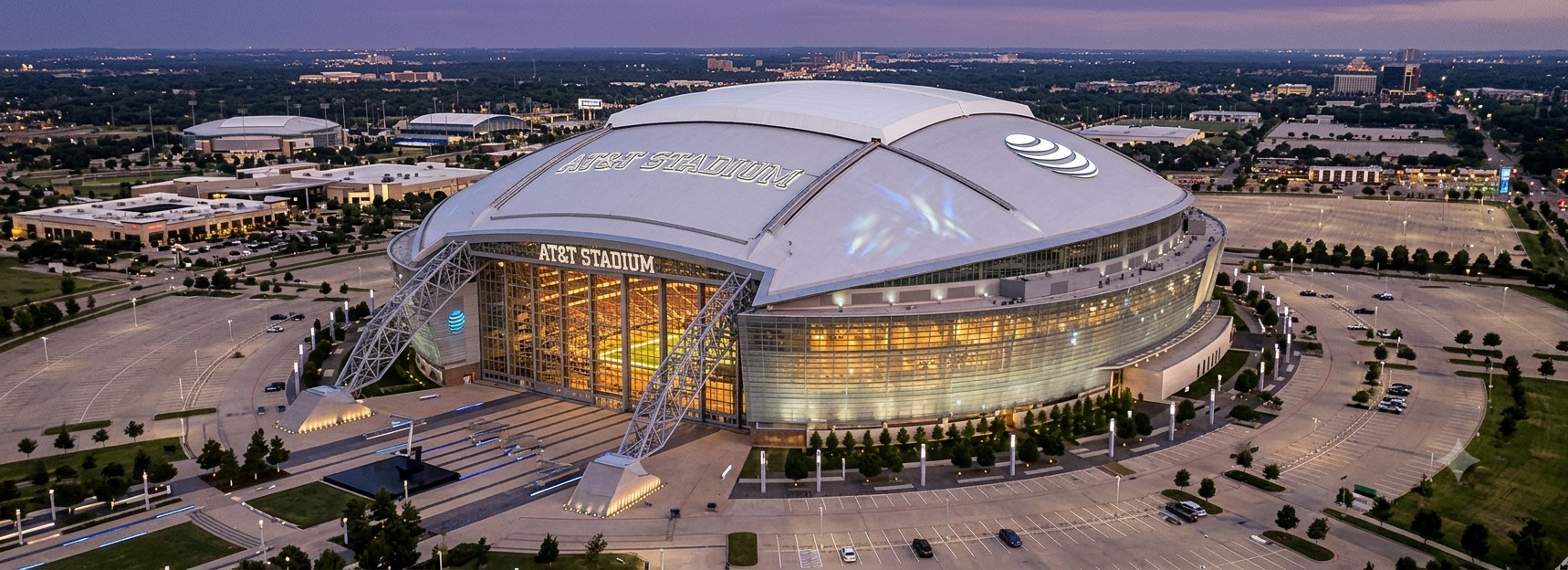
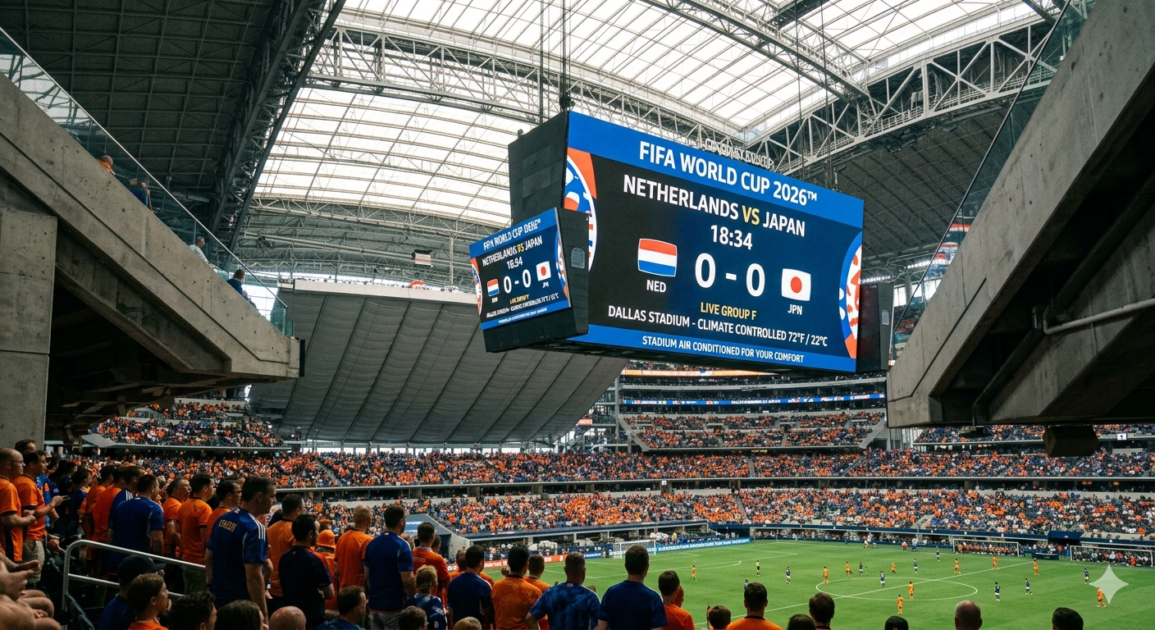
ARLINGTON, Texas — As the high-stakes Group F opening match between the Netherlands and Japan unfolds, global tactical analysis is heavily focused on the pitch. Pundits are frantically dissecting the structural friction between Ronald Koeman’s possession-heavy Dutch side and Hajime Moriyasu’s hyper-efficient, transitional Japanese counter-attack. Yet, as the action plays out, the most impressive performer of the tournament might not be wearing boots. It is the architectural titan hosting them: Dallas Stadium.
Outside the facility, a brutal North American summer is in full force, bringing with it a wave of stifling humidity and punishing triple-digit Texas heat index numbers. Inside, however, a capacity crowd of over 70,000 raucous spectators and 22 elite athletes are moving in a crisp, perfectly regulated 72°F (22°C) oasis. For an event of this magnitude, achieving total atmospheric control is a staggering triumph of modern infrastructure.
Domination Under the Roof
Maintaining a stable environment inside an arena of this scale is a massive undertaking. The stadium offers over 3 million square feet of climate-controlled space, with its retractable roof serving as the centerpiece of its environmental protection.
When stadium operations seal the roof shut, the venue transitions from a standard open-air arena into a massive, isolated dome. At that moment, industrial-grade HVAC systems engage. Rather than simply blowing cold air into the upper decks, the system continuously circulates and conditions millions of cubic feet of air, stripping out moisture and locking in a uniform temperature. For the teams, this mechanical intervention changes everything. It eliminates external variables like unpredictable crosswinds and slick, humidity-heavy grass, ensuring that tactical execution and athletic endurance dictate the final score line.
An Elite Group of Climate-Controlled Domes
The sheer logistical scale of this engineering setup highlights how rare it truly is across the broader tournament landscape. Out of the 16 host cities selected to anchor the expanded 48-team tournament, Dallas Stadium belongs to an incredibly exclusive club of fully air-conditioned venues.
| 2026 World Cup Climate-Controlled Domes | Feature |
| Dallas Stadium | Fully Air-Conditioned (Retractable Roof) |
| Houston Venue | Fully Air-Conditioned (Retractable Roof) |
| Atlanta Venue | Fully Air-Conditioned (Fixed/Retractable) |
| Remaining 13 Host Cities | Open-Air / Passive Shade Only |
While squads playing in the other 13 open-air venues across the continent are forced to map out grueling hydration strategies, monitor heat exhaustion, and adapt to mandated cooling breaks, Dallas offers a premium sanctuary. For the traveling fans, it completely transforms a potentially exhausting trek into a world-class luxury entertainment experience. Fans tracking broader tournament logistics can review stadium profiles directly on the Official FIFA Website.
The Grass Paradox: Growing Turf in the Dark
The ultimate engineering victory inside the dome isn’t how it cools the people, but how it protects the pitch. Governing tournament regulations strictly mandate that all matches must be played on natural grass. This presents an ecological paradox: grass requires natural sunlight and outdoor warmth to thrive—the exact elements the stadium is engineered to shut out.
To solve this, grounds crews deployed a multi-layered technological framework:
- Hybrid Sod Technology: The pitch utilizes an incredibly durable, specialized hybrid sod engineered to withstand severe foot traffic without relying on the immediate recovery benefits of an open root system exposed to the elements.
- Overhead Growth Lighting: During non-match windows, massive, high-tech artificial growth light rigs are suspended from the ceiling structure. These specialized setups emit tailored UV wavelengths to safely mimic the sun, stimulating constant photosynthesis inside an air-conditioned room.
The convergence of elite sport and industrial engineering at Dallas Stadium highlights a broader shift in how modern infrastructure must adapt to shifting global climates. While a significant portion of this tournament’s historic 104-match slate will test human endurance against severe seasonal elements across North America, the controlled environment here has effectively neutralized the weather as a competitive variable. By isolating the field of play from the punishing conditions outside, the venue ensures that when the world’s premier footballing nations collide, outcomes are dictated solely by strategic precision, physical preparation, and raw athletic merit.
