
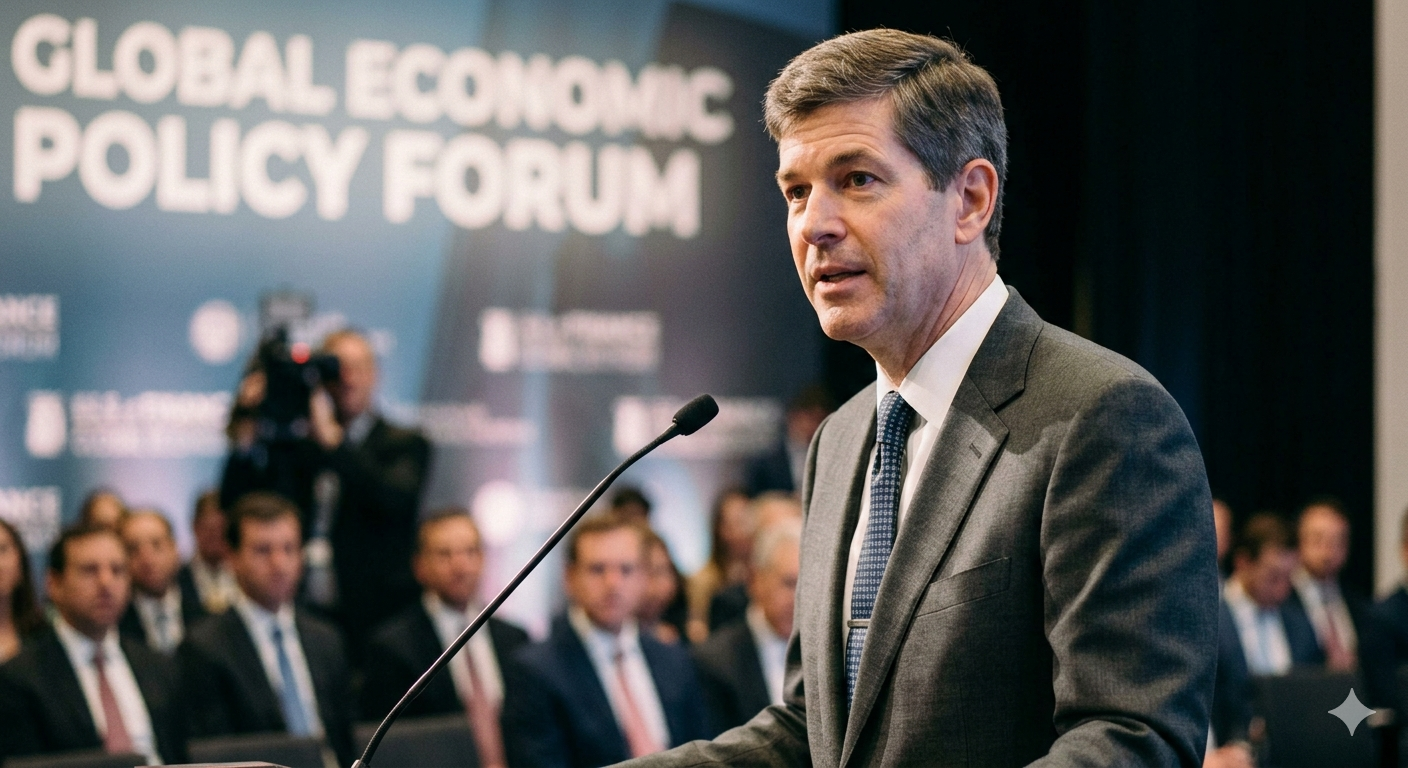
Kevin Warsh was sworn in as the 17th Federal Reserve Chair on May 22 — the closest confirmation in Fed history, the first White House swearing-in since 1987, and the start of what Warsh himself called a “reform-oriented” era at the central bank.
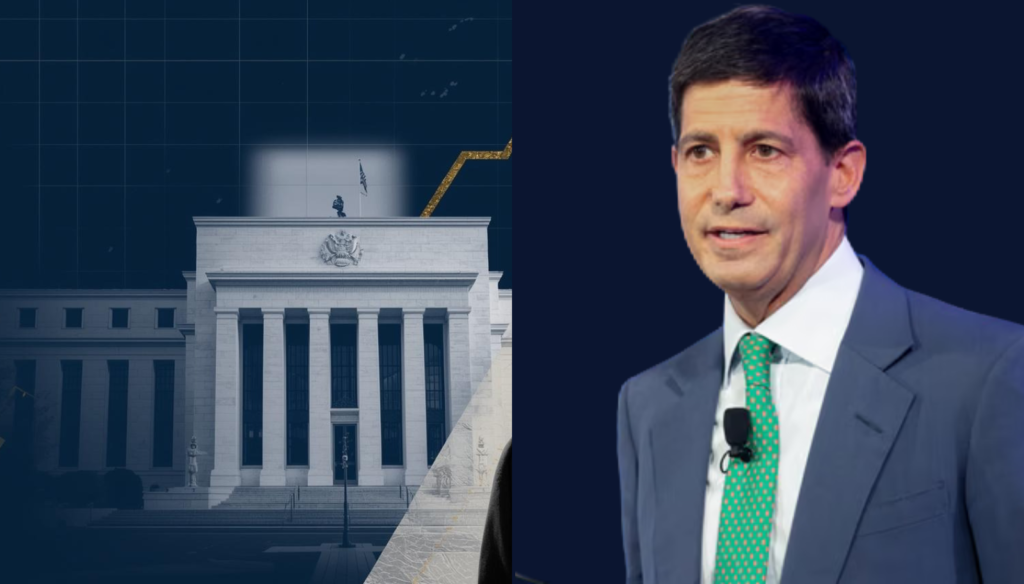
WASHINGTON — Kevin Warsh walked into the White House East Room on Friday morning as a private citizen. He walked out as the most powerful central banker on earth.
Justice Clarence Thomas administered the oath. President Trump was in the front row. And in a room packed with Supreme Court justices, Cabinet members, and congressional leaders, the new 17th chairman of the Federal Reserve made one thing clear: he wasn’t there to do anyone’s bidding.
Whether that independence holds is the central question of the Warsh era — one that markets, lawmakers, and the American public will be watching closely.
THE CONFIRMATION FIGHT
Getting here wasn’t easy. The Senate confirmed Warsh 54–45 on May 13 — the narrowest margin in Fed history. The day before, he cleared a separate 51–45 vote to join the Board of Governors.
Only one Democrat crossed over: Pennsylvania’s John Fetterman. The rest was a near-perfect party-line split, a reflection of just how politicized the Fed had become under Trump’s relentless pressure campaign against outgoing Chair Jerome Powell.
The path to that vote was rocky. Sen. Thom Tillis of North Carolina blocked committee proceedings for weeks, refusing to advance any Fed nominee while the Justice Department pursued a criminal investigation into Powell over headquarters renovations. The blockade only lifted after a U.S. attorney agreed to drop the probe.
Once Tillis stepped aside, the Banking Committee advanced Warsh 13–11 on April 29 — again, straight down party lines.
THE CEREMONY
The last time a Fed chair was sworn in at the White House was 1987, when Ronald Reagan welcomed Alan Greenspan. Trump revived the tradition Friday, and Warsh made the symbolism explicit.
In his remarks, Warsh invoked Greenspan by name — calling him “the first to tell me and show me what this role demands” — before laying out his vision for what comes next.
CBS News reported that Warsh told the crowd he would lead a “reform-oriented Federal Reserve, learning from past successes and mistakes both, escaping static frameworks and models, and upholding clear standards of integrity and performance.”
Attendees included Justices Thomas, Alito, and Kavanaugh, House Speaker Mike Johnson, former Vice President Dan Quayle, and former Secretary of State Condoleezza Rice.
HOW HE GOT HERE
Trump announced Warsh as his pick on January 30, 2026, ending a months-long search that at one point included nearly a dozen candidates. The finalists came down to Warsh, National Economic Council Director Kevin Hassett, Fed Governor Christopher Waller, and BlackRock’s Rick Rieder.
Hassett, long the presumed frontrunner, was passed over — Trump said he was simply too valuable where he was. “He is doing such an outstanding job working with me and my team at the White House, that I just didn’t want to let him go,” Trump posted on Truth Social.
Warsh brings a biography built for this moment: the youngest-ever Fed governor, appointed in 2006 at 35; a survivor of the 2008 financial crisis alongside then-Chair Ben Bernanke; and a longtime critic of what he called Fed overreach in the years that followed.
THE TIMELINE
| DATE | WHAT HAPPENED |
| Jan. 30, 2026 | Trump names Warsh as his pick, ending a field that once included nearly a dozen candidates. |
| Mar. 4, 2026 | Formal nomination filed with the Senate. |
| Apr. 21, 2026 | Warsh testifies before the Senate Banking Committee, pledges to be “strictly independent.” |
| May 12, 2026 | Senate confirms Warsh to the Board of Governors, 51–45. |
| May 13, 2026 | Senate confirms Warsh as Fed Chair, 54–45 — the closest vote in Fed history. |
| May 22, 2026 | Warsh sworn in at the White House. FOMC unanimously elects him as its chair. |
| June 16–17, 2026 | First FOMC meeting. Rates held steady at 3.50%–3.75% in a unanimous 12–0 vote. |
FIRST MEETING, FIRST TEST
Warsh chaired his first FOMC meeting June 16–17. The committee voted 12–0 to hold the federal funds rate steady at 3.50%–3.75%, extending a pause that has now stretched through all of 2026.
NPR reported that consumer prices rose 4.2% in May year-over-year — the hottest reading since April 2023 — driven in large part by energy costs tied to the war in Iran. With inflation running that hot, rate cuts are off the table for now.
The bigger signal came from the dot plot. Fox Business noted that nine of 18 FOMC members now project a rate hike before year-end — a sharp reversal from March, when the median forecast still pointed to cuts.
Warsh also announced five task forces to review monetary policy operations, communications, data sources, productivity, labor markets, and the causes of inflation itself — a signal that the structural changes he promised during his confirmation hearing are already in motion.
WHAT’S AT STAKE
Warsh inherits a Fed that has spent five years fighting inflation that never fully retreated, a president who has made rate cuts a personal priority, and a governing board that was deeply divided even before he arrived.
As CNBC reported, Trump “has made no secret that he expects Warsh to lower rates” — and even joked at one point that he would sue Warsh if borrowing costs don’t come down. On Friday, he softened the message, insisting he wants the new chair to be “totally independent.”
Former Fed colleague Randall Kroszner, now at the University of Chicago, told CBS News he doesn’t expect Warsh to buckle. “Kevin is a long-run strategic thinker,” Kroszner said. “He understands that to get things done, you need to…”
Warsh’s term as Fed Chair runs through May 21, 2030. His seat on the Board of Governors extends to January 31, 2040. The real work, as he put it from the East Room stage, starts now.

1 Comment
Great content! Keep up the good work!