


For many first-time investors, the stock market can feel overwhelming—full of unfamiliar terms, unpredictable price swings, and constant news updates. At its core, though, investing simply means putting money into assets with the goal of growing it over time.
Today, more beginners are exploring investing through tools like fractional shares, low-cost index funds, and easy-to-use brokerage apps. While these options have lowered some barriers, getting started still requires patience and a basic understanding of how markets work. This guide explains the fundamentals in a clear, practical way — without hype or unrealistic promises.
1. Before You Buy: Build a Strong Financial Foundation
Successful investing begins before you purchase your first stock. Without a solid financial base, even good investments can turn into costly mistakes.
- Build an Emergency Fund: Before investing, aim to save three to six months of living expenses in a high-yield savings account. This cushion protects you from having to sell investments during market downturns to cover unexpected costs. The Consumer Financial Protection Bureau (CFPB) provides excellent frameworks for setting these goals.
- Eliminate High-Interest Debt: If you are carrying credit card debt with interest rates near 20% or higher, paying it off is your best “investment.” Eliminating high-interest debt provides a guaranteed return that often far exceeds historical stock market averages.

2. Safe Bets for Beginners: Stocks vs. ETFs
For new investors, the objective is not to “beat the market” but to build consistent, long-term wealth while managing risk.
Exchange-Traded Funds (ETFs): The Beginner’s Best Friend
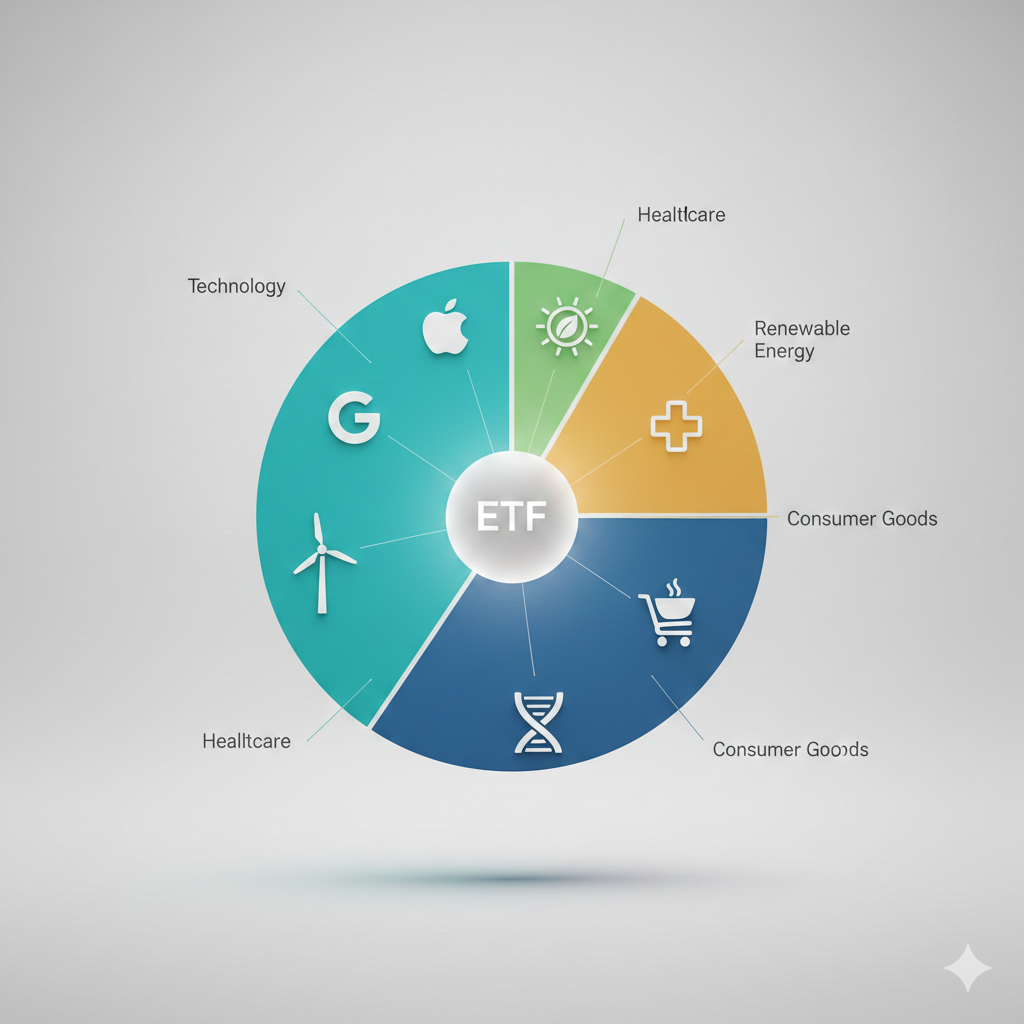
An ETF allows you to invest in hundreds of companies at once, providing instant diversification. Popular options include:
- S&P 500 ETFs (e.g., VOO, SPY): These track the 500 largest U.S. companies. Historically, the S&P 500 has delivered an average annual return of approximately 10% over long periods.
- Total Stock Market ETFs (e.g., VTI): These offer exposure to the entire U.S. equity market, including small and mid-cap companies.
- International ETFs (e.g., VXUS): These diversify your portfolio globally, capturing growth in emerging and developed markets outside the U.S.
Choosing “Safer” Individual Stocks
If you choose to buy individual shares, focus on quality over hype. Look for:
- Blue-Chip Companies: Established firms with consistent earnings and global recognition.
- Competitive Moats: A term popularized by Warren Buffett referring to a company’s sustainable advantage over competitors.
- Dividend Payments: Companies that pay dividends often demonstrate higher financial discipline.
To verify a company’s health, you can review official filings via the SEC EDGAR database.
3. Choosing the Right Brokerage App in 2026
Modern platforms offer commission-free trading and educational tools. When choosing, ensure the broker is a member of the Securities Investor Protection Corporation (SIPC), which protects against the loss of cash and securities if a brokerage firm fails.
- Fidelity: Ideal for long-term investors due to its robust research and retirement tools.
- Robinhood: A pioneer in mobile-first investing, best for those prioritizing a simple interface.
- Webull: Excellent for active learners; their paper trading feature allows you to practice without risking real money.
- SoFi Invest: A strong “all-in-one” choice for those who want to manage banking and investing in a single app.
2026 Brokerage Comparison Table
| Platform | Stock/ETF Commission | Options Fees | Account Minimum | Best Feature for Beginners |
| Fidelity | $0 | $0.65 per contract | $0 | Full Service: 24/7 support & zero-expense ratio index funds. |
| Robinhood | $0 | $0 (plus regulatory fees) | $0 | Simplicity: Cleanest mobile interface and IRA matching. |
| Webull | $0 | $0 (no contract fees) | $0 | Practice: Robust “Paper Trading” to learn without risk. |
| SoFi Invest | $0 | $0 (no contract fees) | $0 | All-in-One: Integrated banking, loans, and career coaching. |
| Gotrade | $0* | N/A | $1 | Global Access: Allows non-U.S. users to buy fractional U.S. shares. |
- *Note: While commissions are $0, small regulatory fees (SEC/FINRA) apply to all sell orders across all platforms. Gotrade may have small FX conversion fees for international deposits
4. The Golden Rule: Time in the Market
One of the most common mistakes is trying to “time the market,” which means guessing when prices will be lowest. Even professionals struggle with this. Instead, research from Vanguard suggests that simply being invested—maintaining “time in the market”—is more effective than trying to time it.
For those with a large amount of cash to invest, two main strategies exist:
- Lump-Sum (The “Big Splash”): Investing all your money immediately. This is mathematically superior and outperforms other methods about 68% of the time because it maximizes your time in the market.
- Cost Averaging (The “Step-by-Step”): Investing fixed amounts at regular intervals. While it may yield lower returns than a lump sum, it acts as a psychological “safety net” for those afraid of a sudden market drop.
Final Thoughts
Investing in 2026 is about patience and consistency. By building a foundation, staying diversified, and utilizing reputable tools, you can confidently participate in global economic growth.
Disclaimer: Investing involves risk, including the possible loss of principal. Past performance does not guarantee future results. Always conduct your own research or consult a Certified Financial Planner (CFP) before making significant financial decisions.