

Wages are finally beating inflation, and the rental market is cooling—yet for millions, the “Big Three” costs and a rising debt trap are keeping financial freedom out of reach.
By Artha Journal

On paper, the American worker is currently winning. As of early 2026, the economic headlines are remarkably consistent: the labor market remains resilient, and for the first time in years, wage growth is decisively outstripping the pace of price increases. Between January 2025 and January 2026, the nominal average wage grew 4.3% while inflation stood at 2.4%—a gap that, in theory, represents a genuine increase in purchasing power, according to the USAFacts.
And yet, a persistent, nagging question continues to surface in breakrooms and around kitchen tables: If I’m making more money than ever, why does my bank account still feel empty?
The answer to this “Pay Raise Paradox” is no longer just about the price of eggs or gasoline. Instead, it is found in the widening gap between the costs of essential “Big Three” pillars—housing, healthcare, and childcare. While some of these pressures are finally beginning to thaw in 2026, others have set a new, higher floor for the cost of basic stability.
The Real Wage Reality: A 20-Year Perspective
To understand why a 4% raise feels negligible, one needs to look at the long-term erosion of the dollar. Economists distinguish between nominal wages (the number on your pay stub) and real wages (what that money actually buys).

According to the U.S. Bureau of Labor Statistics, real average hourly earnings increased by 1.4% from February 2025 to February 2026, yet a longer-term view reveals a stark disparity between raw numbers and actual purchasing power. Since March 2006, the nominal average weekly wage climbed from $685 to $1,275—an 86% increase—but when adjusted to January 2026 dollars, that 2006 wage is worth $1,116, meaning the real gain is a modest 14.3%. While the nominal paycheck grew by $590, the “real” value grew by only $159, suggesting that for many workers, modern wage increases are less of a step forward and more of an overdue correction after decades of inflationary pressure.
Meanwhile, the BLS Employment Cost Index for the 12 months ending December 2025 tells a similarly sobering story: wages and salaries increased 3.3% while benefit costs rose 3.5%—with inflation-adjusted wages up only 0.6% for the year.
1. Housing: The Great Rebalance of 2026
For years, housing was the primary engine of the paradox. In 2026, the narrative is finally shifting from “uncontrolled spikes” to a “slow rebalance,” and for renters specifically, the data offers genuine cause for relief.
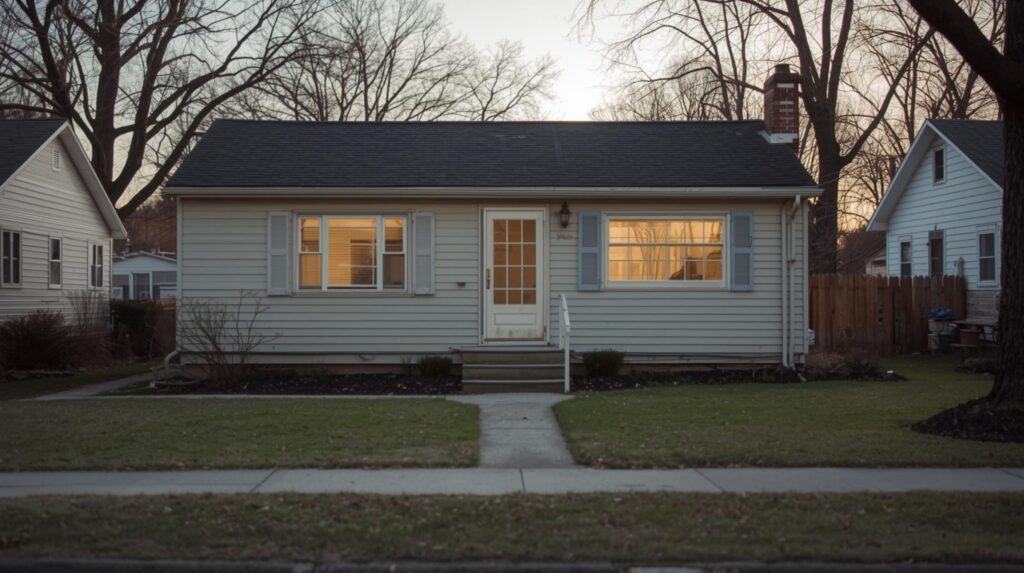
The Rental Thaw: A historic construction boom has caught up with demand. According to a January 2026 Zillow report, multifamily rents are expected to remain mostly flat—declining slightly by 0.2% by the end of 2026—while single-family rents are projected to rise just 1.1% annually, a sharp slowdown from the rapid increases of recent years, as higher vacancy rates and newly built apartment units improve renters’ bargaining position A median-income household would now spend 24.3% of its income on typical apartment rent, down slightly from 25% in February 2020. By another measure, the typical household is spending 26.4% of its income on rent—the lowest share since August 202, according to Fox Business.
Renters are even getting concessions. In January, just below 40% of rental listings on Zillow included at least one concession, such as a free month of rent or a reduced deposit—a figure that remains elevated compared to historical norms and underscores how aggressively property managers are competing for tenants.
The Homeownership Hurdle: While renters have begun to see some relief, would-be buyers remain caught in a persistent financial squeeze. Zillow forecasts that mortgage rates will remain above 6% throughout 2026, creating a high barrier to entry despite marginal improvements in buying power. A Zillow affordability analysis published in March 2026 found that a median-income U.S. household can now afford a $331,483 home—a $30,302 increase in purchasing power compared to last year. While this represents progress, the figure still falls painfully short of available inventory in many major metropolitan areas. For these households, the “raise” received in a modern paycheck often flows directly into a down payment fund that continues to struggle against a fast-moving market.
2. Healthcare: The “Quiet Alarm Bell”
If housing is cooling, healthcare is heating up. The 2025 KFF Employer Health Benefits Survey—covering more than 1,800 employers and the roughly 154 million Americans under 65 who depend on employer-sponsored coverage—highlights a troubling and widening divide.

Annual premiums for employer-sponsored family health coverage reached $26,993 in 2025, up 6% from the prior year. On average, workers contributed $6,850 toward the cost of family coverage. That 6% increase directly outpaced the 4% wage growth recorded over the same period. Over the last five years, the average premium for family coverage has risen 26%, compared to a 28.6% increase in workers’ wages and inflation of 23.5%.
The situation worsens when you factor in out-of-pocket exposure. The average deductible for workers with single coverage and a general annual deductible was $1,886 in 2025—a figure that has risen 77% over the last decade. And nearly three-quarters of covered workers face an out-of-pocket maximum above $3,000 for single coverage, including one in five who face a maximum above $6,000.
In plain terms, a worker who gets a $2,000 raise this year may well be handing much of it back to their insurer before spring.
3. Childcare: A Primary Driver of Workforce Exits
Childcare remains the most regressive “tax” on the American workforce—a cost that grows more punishing the less you earn.

According to the Child Care Aware of America 2024 Price & Supply report, Americans spend an average of $13,267 annually on center-based infant care. The burden does not fall equally. It would take 35% of a single parent’s median household income to afford the national average childcare price—more than five times the 7% threshold the federal Department of Health and Human Services considers affordable.
For families with two children, the math becomes even more alarming. The average annual cost of daycare for two children—one toddler and one infant—rose to $28,168 nationally, representing roughly 35% of median household income. In high-cost states, it is far worse: families in Massachusetts pay $47,012 annually for two children—44% of that state’s median household income.
This financial reality has become a primary driver of what economists call “workforce exits”—particularly among mothers. When the cost of going to work approaches or exceeds the paycheck itself, staying home becomes the rational economic choice, regardless of career ambitions.
4. The Shifting Calculus of Job-Hopping
For years, the conventional wisdom was simple: change jobs, get a bigger raise. The Atlanta Fed’s Wage Growth Tracker now paints a more nuanced picture for 2026.
As of February 2026, the Atlanta Fed’s Wage Growth Tracker edged up to 3.7%. For job switchers, the tracker held steady at 4.7%, while for job stayers it edged up to 3.6%. The switcher premium still exists, but the window is narrowing. As CNBC reported in mid-2025, annual wage growth for job stayers eclipsed that of job switchers for a sustained period—a reversal that economists said pointed to underlying weakness in the labor market, with a depressed quit rate suggesting workers aren’t voluntarily leaving because they lack confidence in their ability to find better positions.

This doesn’t mean job mobility is irrelevant—the 1.1 percentage-point gap between switchers and stayers in February 2026 is still meaningful over a career. But it does mean workers can no longer rely on the “hop every two years” playbook as a reliable financial escape hatch in the same way they could during the Great Resignation.
The “Pay Raise Paradox” is not a sign of personal financial failure. It is a structural mismatch hiding in plain sight. Real wage gains are real—but they are being systematically absorbed by costs that have compounded far faster than any single paycheck can address.
The cooling of the rental market in 2026 offers genuine, data-backed relief for renters—perhaps the clearest bright spot in an otherwise complicated picture. But healthcare premiums that grow at 6% annually and childcare costs that swallow a third of a single parent’s income don’t respond to individual effort. They require deliberate strategy: maximizing employer contributions during open enrollment, rigorously comparing health plans for lower deductibles, advocating for employer-sponsored childcare benefits, and treating job mobility as a calculated tool rather than a reflexive reaction.
Understanding the structural nature of the paradox doesn’t make it less frustrating. But it does move the conversation away from “Why can’t I get ahead?” toward a more honest question: which of these structural headwinds can I actually influence—and how? That reframe is where financial progress, however incremental, begins.
