

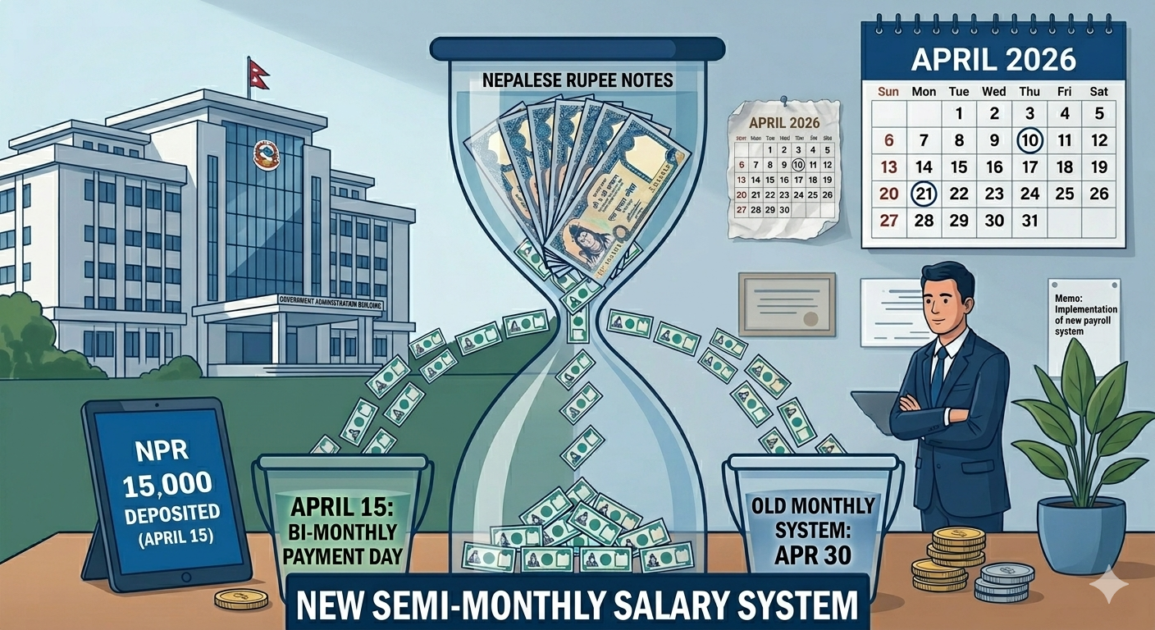
- Nepal is transitioning civil servants to a 15-day pay cycle to improve liquidity and reduce dependence on high-interest loans.
- The move aligns with the U.S. model, where bi-weekly pay is standard (and 27% are paid weekly), and India’s 2019 Labour Codes favoring frequent payment cycles.
In line with modern fiscal reforms, the Government of Nepal is preparing to transition from a monthly salary cycle to a semi-monthly payment system for all civil servants. This move aims to dismantle the long-standing tradition of waiting until the end of the month for remuneration, providing employees with a more consistent cash flow to manage their daily expenses.
The Ministry of Finance recently issued a directive to the Financial Comptroller General Office to facilitate the necessary technical adjustments for distributing salaries and allowances every 15 days. As reported by various national media outlets, this ministerial-level decision is intended to alleviate the financial pressure caused by rising inflation and the high cost of living.
Government officials believe that this “bi-monthly” injection of funds will help maintain market liquidity and prevent employees from falling into debt traps or high-interest short-term loans usually taken to cover end-of-month deficits.
This shift aligns Nepal with international labor standards practiced in several developed economies. In the United States, for instance, federal employees typically receive their paychecks on a bi-weekly basis, resulting in 26 pay periods per year. Data from the U.S. Bureau of Labor Statistics (BLS) indicates that roughly 27% of private-sector employees now receive their wages on a weekly basis. This high-frequency model is credited with helping households manage recurring liabilities, such as mortgages and utility bills, with greater precision.This structure is widely credited with helping households manage recurring costs like mortgage payments and utility bills more effectively.
Similarly, in neighboring India, the introduction of the new Labour Codes has paved the way for flexible payment cycles, including weekly and fortnightly options. Many Indian corporate giants and startups have already adopted “on-demand pay” models to enhance financial liquidity for their workforce, recognizing that a 30-day wait for a paycheck is often outdated in a fast-paced digital economy.
With Nepal’s digital banking infrastructure now robust enough to handle high-frequency transactions, the technical transition for government employees is expected to be seamless. Experts suggest that if this model proves successful within the civil service, it could set a precedent for the private sector, fundamentally changing the earning and spending patterns of the Nepali workforce.
